Every restaurant technology pitch in 2026 has the letters “AI” in it. Ordering agents, forecasting engines, AI-written marketing, kitchen copilots. For operators running tight margins and thin teams, the question isn’t whether AI is coming. It’s which parts are ready to earn their keep today, and which are still science projects.
The good news: the industry now has enough real-world data to separate the two.
Where adoption actually stands
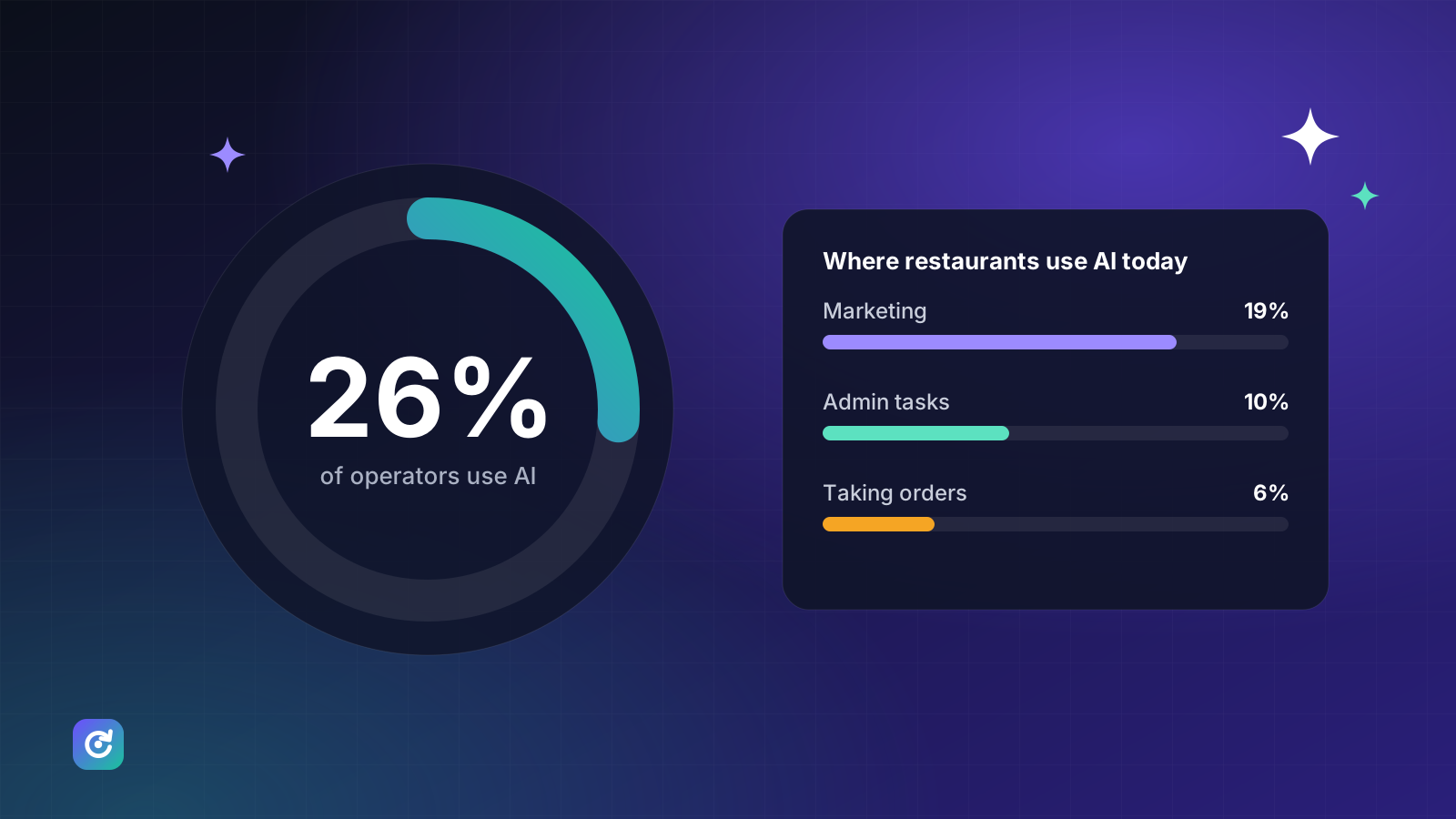
According to the National Restaurant Association’s State of the Restaurant Industry 2026 report, 26% of operators say they use AI-related tools in their restaurants. That’s meaningful progress, but the breakdown is telling:
- Marketing is the most common use: 19% of full-service and 15% of limited-service operators use AI there.
- 10% use AI for at least some administrative tasks.
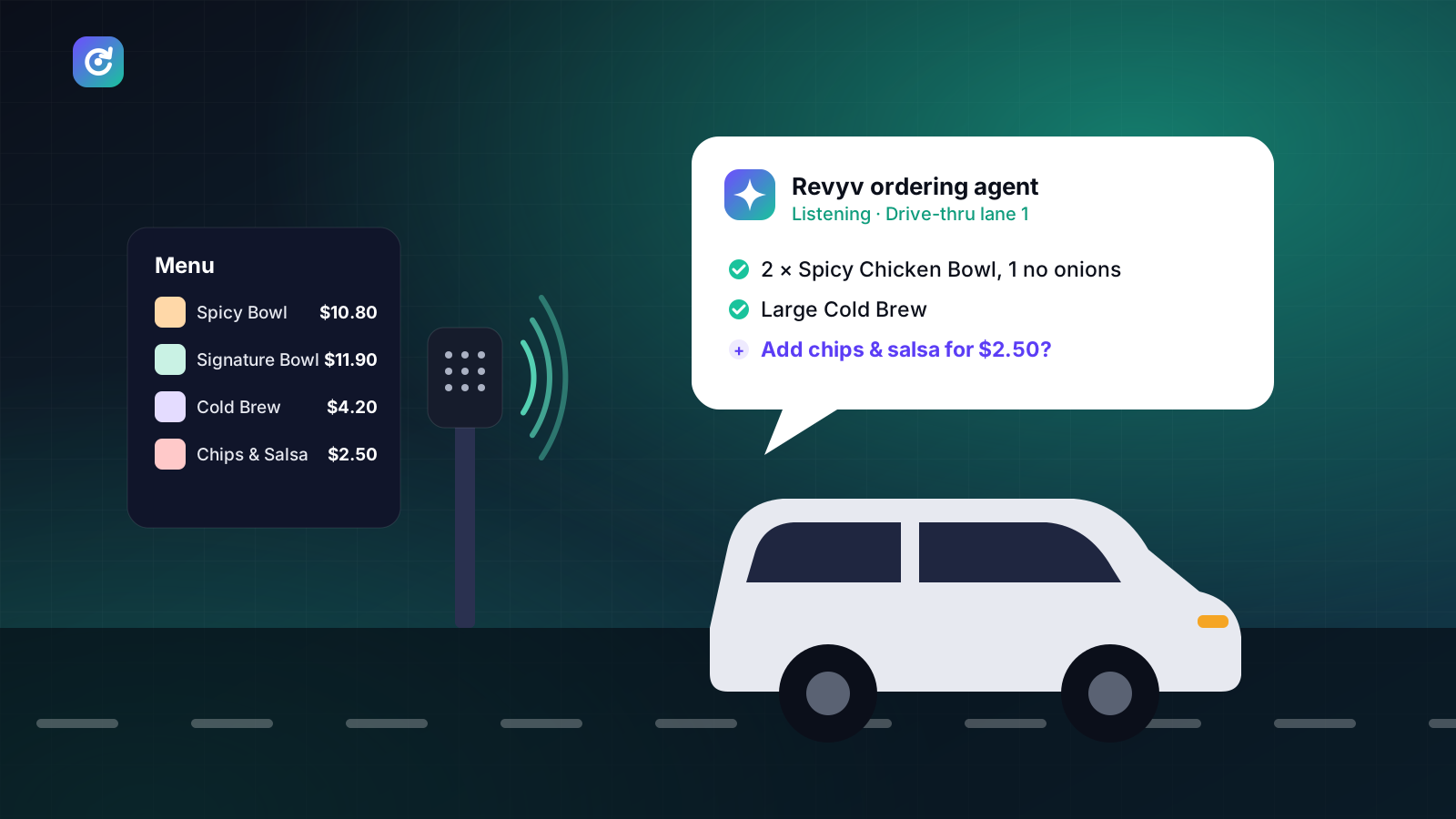
- Only 6% use AI to take customer orders.
In other words, most restaurant AI today lives in the back office and the marketing team, not in front of guests. And appetite is growing: 60% of operators plan to invest more in technology to improve the customer experience, and more than half plan to invest in front-of-house productivity tools.
Guests are ahead of many operators. The same NRA research found that roughly six in ten millennial and Gen Z adults would place an order with an AI-powered assistant.
The reality check
Not every deployment has gone smoothly, and that’s useful information.
Taco Bell, one of the most visible adopters of drive-thru voice AI, publicly reconsidered where the technology belongs after a viral glitch, with its technology chief noting that the busiest locations may be better served by human order-takers. Across industries, an MIT study published in 2025 reported that 95% of organizations using generative AI had yet to see a return on that investment.
Restaurant Business summed it up well: the hype has deflated, and that’s healthy. AI works best as one tool among many, applied to specific jobs, not as an all-or-nothing transformation.
At the same time, the targeted wins are real. Starbucks says that since introducing an AI-powered inventory tool, its stores count inventory eight times more frequently. That’s the pattern to copy: a narrow, high-frequency, measurable job.
What separates AI that works from AI that doesn’t
Looking across the deployments that are scaling, a few patterns stand out.
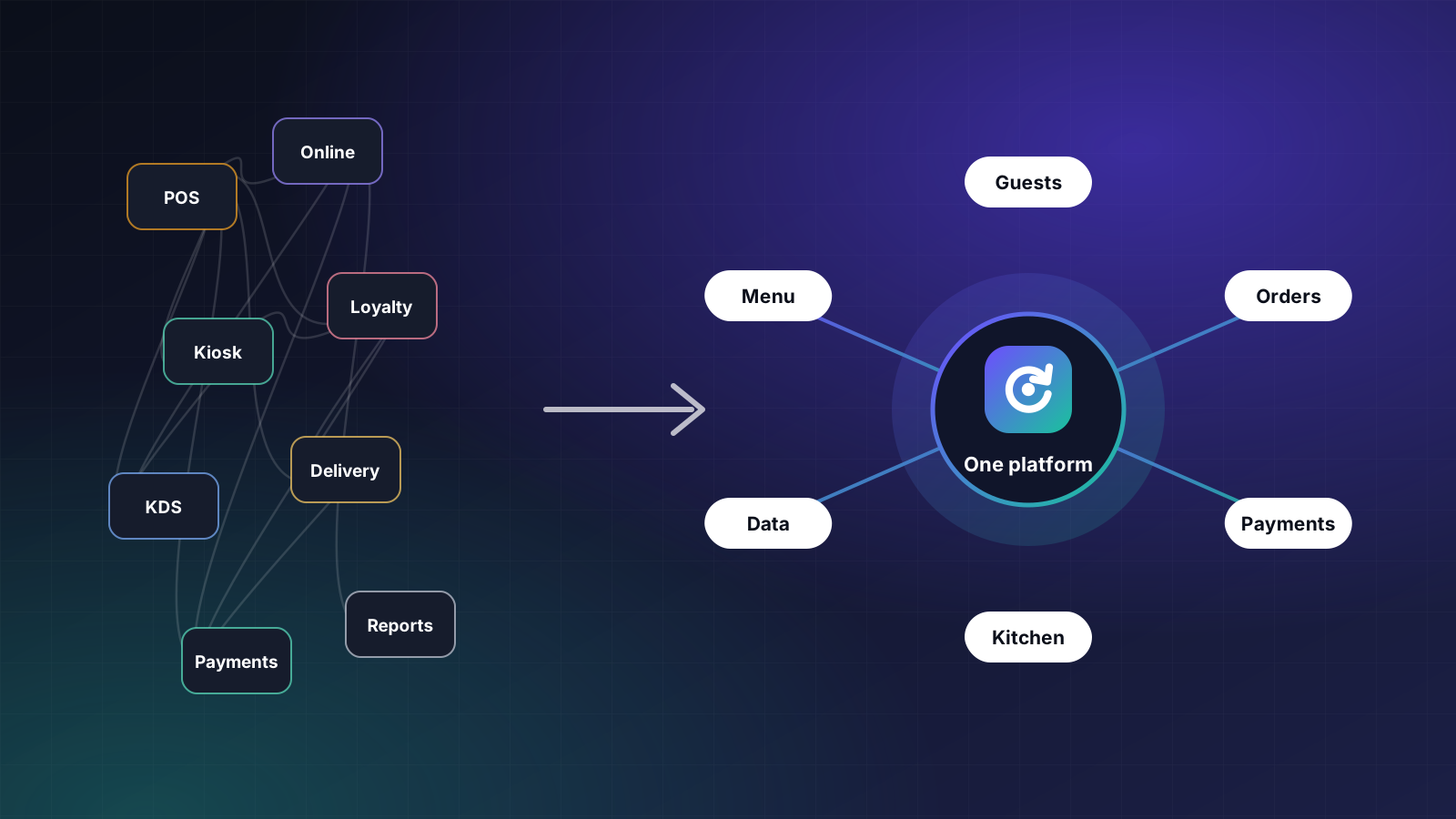
- It works on clean, connected data. An AI that recommends prep levels is only as good as the sales, menu and inventory data it sees. If every channel has its own menu and its own order history, the AI is guessing.
- It does a specific job. “Forecast lunch demand at this store” beats “use AI to improve operations.”
- People stay in the loop. The best deployments let AI propose and let managers approve, especially for anything that touches pricing, menus or guests.
- It fails safely. If the AI service has a bad day, guests should still be able to order and pay. AI should make a restaurant better, never make it unable to take money.
A practical way to start
If you’re planning your next twelve months, here’s a sequence that keeps risk low and learning high:
- Fix the data foundation first. One menu, one guest profile and one order stream across channels. This is the single biggest predictor of whether AI pays off.
- Start in the back office. Forecasting, prep lists, scheduling suggestions and menu-performance insights are low-risk, measurable and invisible to guests if they’re imperfect.
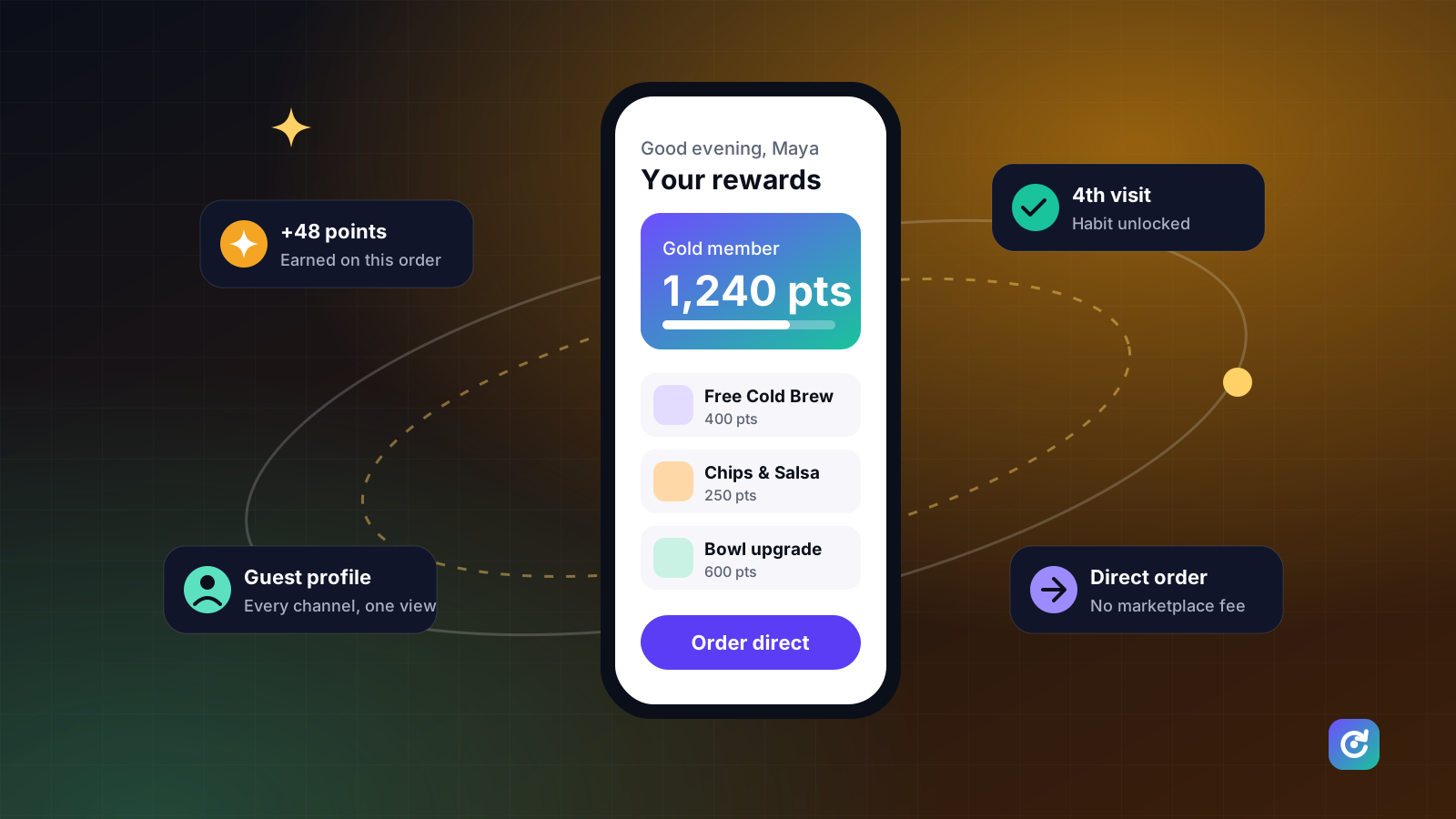
- Add guest-facing AI where it’s additive. Conversational ordering in chat and apps, smart upsells and personalized offers, with a clean handoff to your normal checkout.
- Pilot, measure, then scale. Turn features on location by location, compare against control stores and keep a kill switch.
How Revyv approaches it
Revyv is built as an AI-native, unified commerce restaurant OS. Because ordering, kitchen, payments, loyalty and guest data share one platform, Revyv AI works from a complete, real-time picture of every brand and market. Our agents propose; your team approves. And by design, ordering and checkout keep working even if every AI service is unavailable.
If you’re deciding where AI fits in your restaurants, meet Revyv AI or talk to our team.
Sources
- NRA: Over 25% of restaurant operators use AI, Restaurant Dive, February 2026 (National Restaurant Association, State of the Restaurant Industry 2026)
- Restaurant AI gets a much-needed reality check, Restaurant Business
- Taco Bell’s drive-thru voice AI expands to nearly 900 restaurants, Nation’s Restaurant News, July 2026