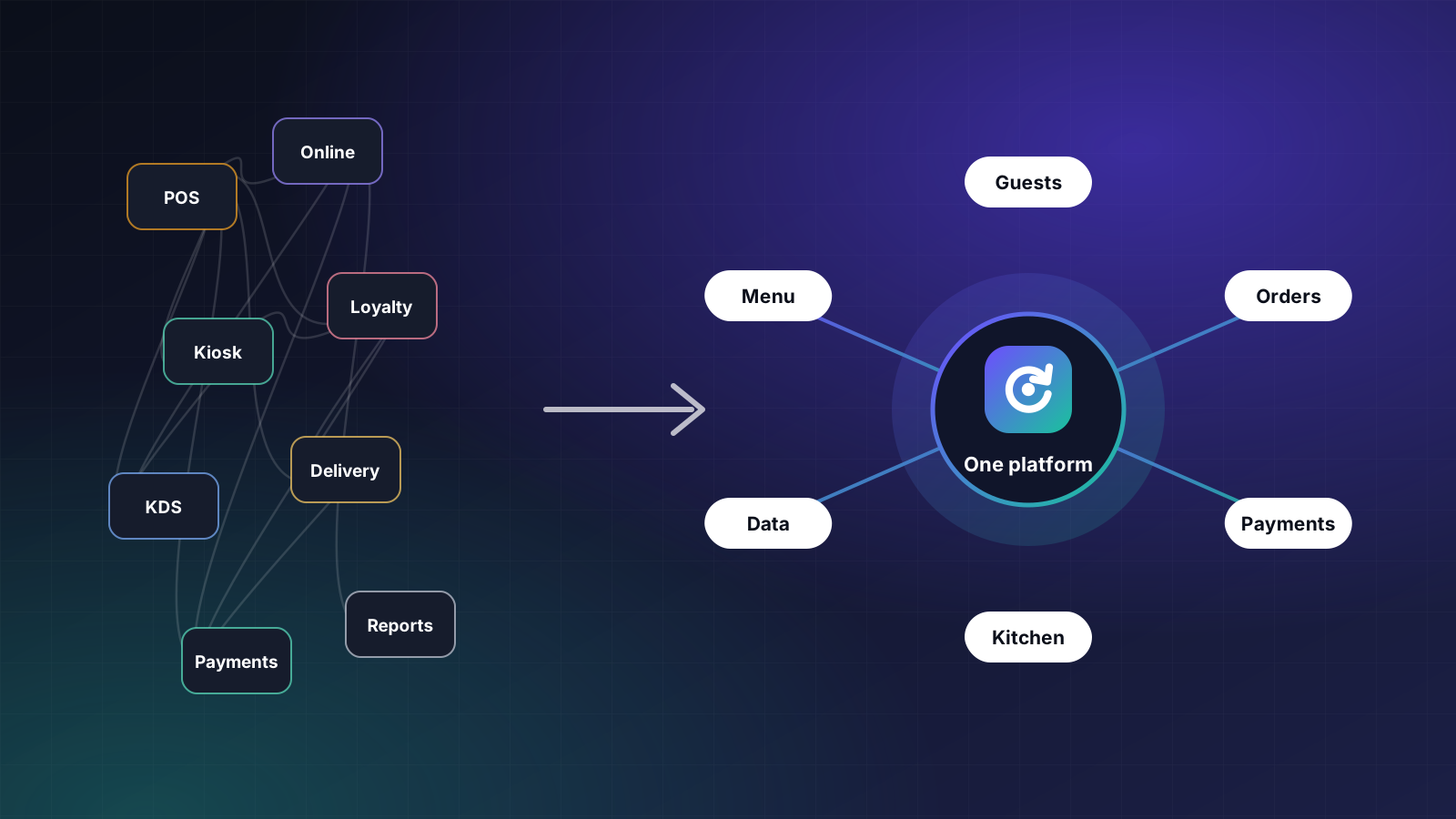
Restaurants digitized fast. Online ordering, apps, kiosks, delivery marketplaces, loyalty, kitchen displays, labor tools: each arrived to solve a real problem, usually under pressure and often during the pandemic. The result, for many multi-unit groups, is a stack of separate systems held together by integrations, spreadsheets and the patience of the operations team.
That patchwork is now one of the biggest drags on restaurant performance, and the industry knows it.
Consolidation has become a top priority
In a restaurant technology survey reported by Digital Transactions in 2025, 64% of restaurants named technology and systems consolidation as a priority. Better online-ordering strategies (58%) and improved data orchestration and analytics (55%) followed close behind. The same theme ran through the industry’s biggest trade show this year, where the hunt for a unified tech stack was one of the defining conversations.
Executives across the industry describe the same costs of fragmentation:
- Contract and vendor sprawl. Every vendor brings its own contract, terms, support desk and roadmap, which slows decisions and weakens negotiating power.
- Inconsistent data. When the POS, the app and the delivery marketplaces each name the same menu item differently, reporting turns into reconciliation.
- Harder troubleshooting. When an order goes wrong, it’s unclear which of five systems caused it.
- Too few people to manage it all. Restaurant teams don’t have IT departments to babysit a dozen integrations.
Why it matters more now: AI needs one source of truth
Fragmentation used to be an efficiency problem. In 2026 it’s also an AI problem. Forecasting, personalization and AI ordering all depend on complete, consistent data. An AI that only sees one channel’s orders, or a menu that’s out of sync with the kitchen, will give confident but wrong answers. Consolidation is the prerequisite for AI that actually pays off.
What “unified” should really mean
Not every “all-in-one” platform is truly unified. When you evaluate options, look for these properties:
- One menu, everywhere. Items, modifiers, prices and availability authored once and published to every channel, including marketplaces.
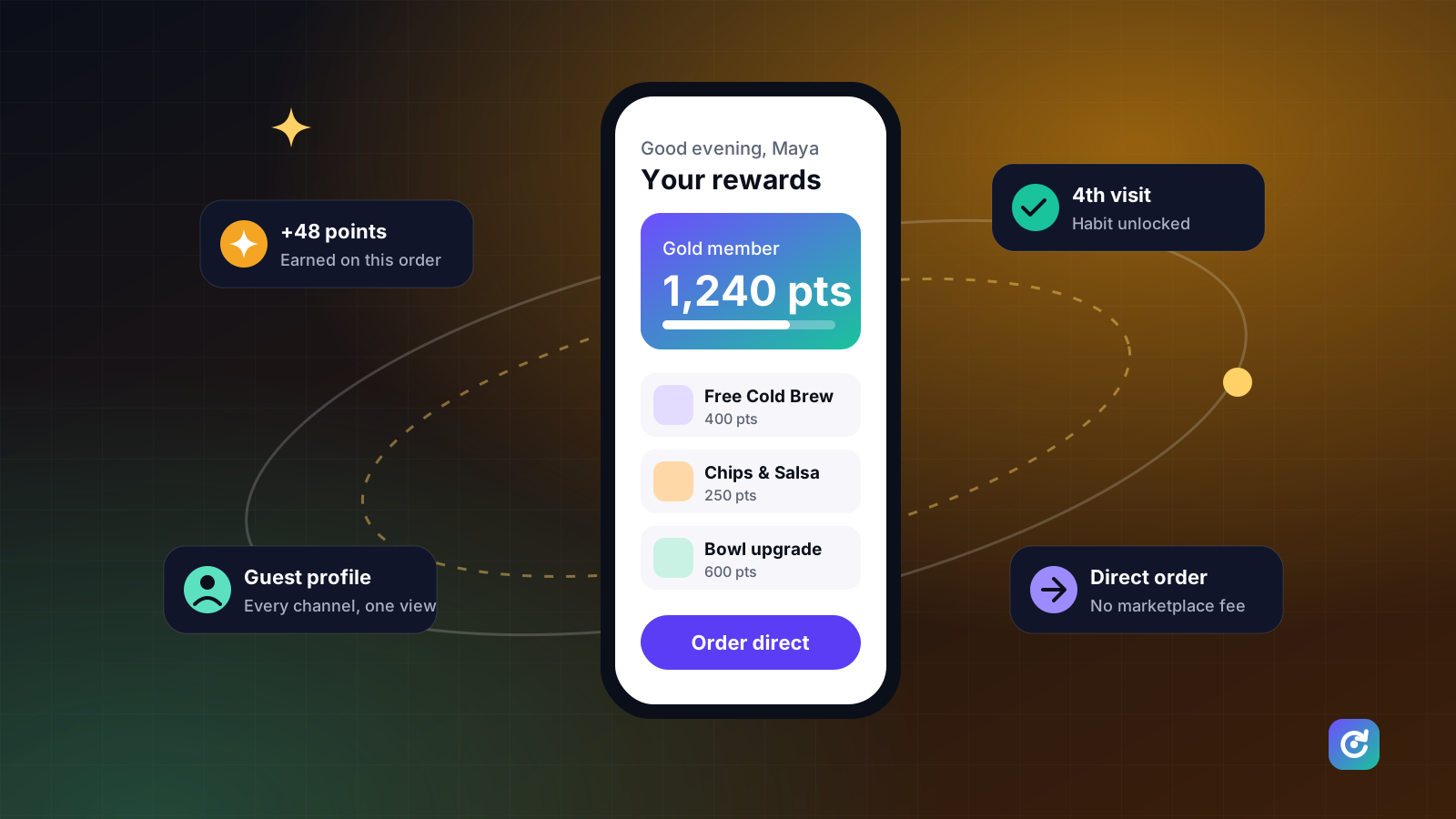
- One guest profile. Orders, loyalty and preferences that follow the guest across web, app, kiosk, POS and delivery.
- One order stream. Every channel’s orders reach the kitchen in the same queue, with the same routing and pacing rules.
- One payments layer. Every tender, reconciled to the order that created it.
- Multi-brand and multi-market by design. Brands, markets, currencies, taxes and languages are settings, not separate deployments.
- Open, not closed. Consolidation shouldn’t mean lock-in. Look for documented APIs, so you can keep the specialist tools you love and connect them once.
- Modular adoption. You should be able to start with one product and add the rest without a rip-and-replace project.
A realistic path to consolidation
Few groups can replace everything at once, and they shouldn’t try. A practical sequence:
- Start with the menu. Centralize menu and pricing management first; it touches every channel and delivers immediate consistency.
- Unify the order stream. Bring digital, marketplace and in-store orders into one kitchen flow.
- Connect the guest. Merge loyalty and guest data so marketing works from one profile.
- Retire systems as you go. Each step should remove a vendor, not add one.
How Revyv helps
Revyv is an AI-native, unified commerce restaurant OS. Its products, from online ordering, POS and kitchen display to marketplace integration, delivery dispatch, payments, loyalty and guest data, share one menu, one guest and one order stream. Each product can be deployed on its own and integrates with the systems you already run, so you can consolidate at your own pace, brand by brand and market by market.
Explore Revyv solutions or see our integrations.
Sources
- How Restaurants Are Racing to Consolidate Their Tech Stacks, Digital Transactions, May 2025
- National Restaurant Show 2026: In search of the unified tech stack, Kiosk Industry
- NRA: Over 25% of restaurant operators use AI, Restaurant Dive, February 2026