The drive-thru is where restaurant AI faces its toughest test. It’s loud, it’s fast, guests change their minds mid-sentence, and a slow order holds up every car behind it. It’s also where the payoff is biggest: the lane is a top revenue channel for quick-service brands, and order-taking ties up a team member for every car.
In 2026, voice AI at the drive-thru is no longer a lab experiment. Taco Bell’s voice AI, built with partner Omilia, is now live in more than 890 U.S. restaurants across 38 states, up from just over 100 in mid-2024, according to Nation’s Restaurant News. McDonald’s, Wendy’s, Carl’s Jr., Dairy Queen, Bojangles and others are testing or rolling out their own systems.
Here’s what the first wave has taught the industry.
1. Speed parity is achievable
The biggest fear was that AI would slow the lane. The early evidence says it doesn’t have to. Omilia reports that drive-thru transactions handled by voice AI are on par with, or faster than, traditional order-taking, and Taco Bell has said its earlier two-year test improved both order accuracy and speed of service. These are company-reported results, but they match what operators hoped to see: AI that keeps up with the lane, rather than becoming the bottleneck.
2. The real win may be your team
One of the more interesting reported outcomes isn’t about guests at all. Taco Bell says locations using voice AI have seen higher employee retention than those without it. Its technology leadership describes the benefit as easing team members’ workloads and freeing them to focus on hospitality and food. When one person no longer has to take orders, make drinks and run the window at the same time, the job gets better.
3. It needs guardrails for the edge cases
Voice AI’s most famous moment so far was a guest who ordered 18,000 cups of water, a prank that went viral. It’s funny, but it highlights a serious design point: an ordering agent needs common-sense limits, quantity checks, real-time menu availability and an easy way for a team member to step in. The best systems treat these as core features, not afterthoughts.
4. Deploy it where it fits, not everywhere at once
After that incident, Taco Bell’s technology chief said the company is weighing where to deploy voice AI, noting that very busy locations may be better served by human order-takers. That’s a sensible model for everyone: roll out by store profile, compare results against control locations and expand where the numbers hold up. A feature flag per location is as important as the AI itself.
5. The menu data matters as much as the model
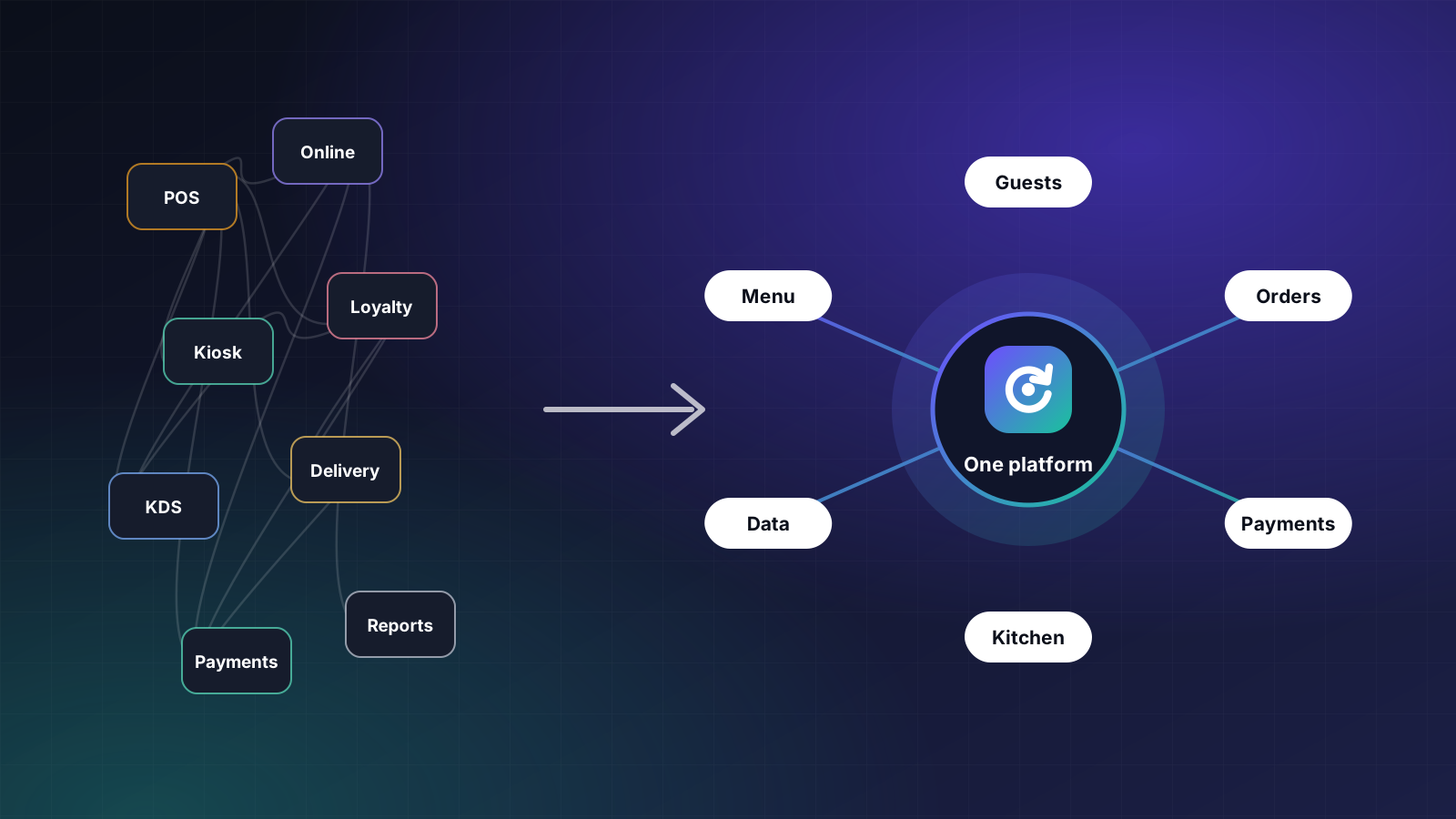
An AI order-taker is only as good as the menu it knows. If the drive-thru runs on a different menu file from the app, the kiosk and the POS, the AI will offer items that are sold out, miss modifiers or quote the wrong price. Taco Bell’s system adapts to each location’s menu and real-time stock levels, and that’s exactly the requirement: one source of truth for items, modifiers, prices and availability across every channel.
What this means for operators
If you’re considering voice AI, start with three questions:
- Is our menu unified? One menu, with real-time availability, shared by every channel.
- Can we control rollout by location? Pilot, measure and keep a kill switch.
- Does the order flow into our normal checkout and kitchen? Voice orders shouldn’t be a separate silo.
How Revyv helps
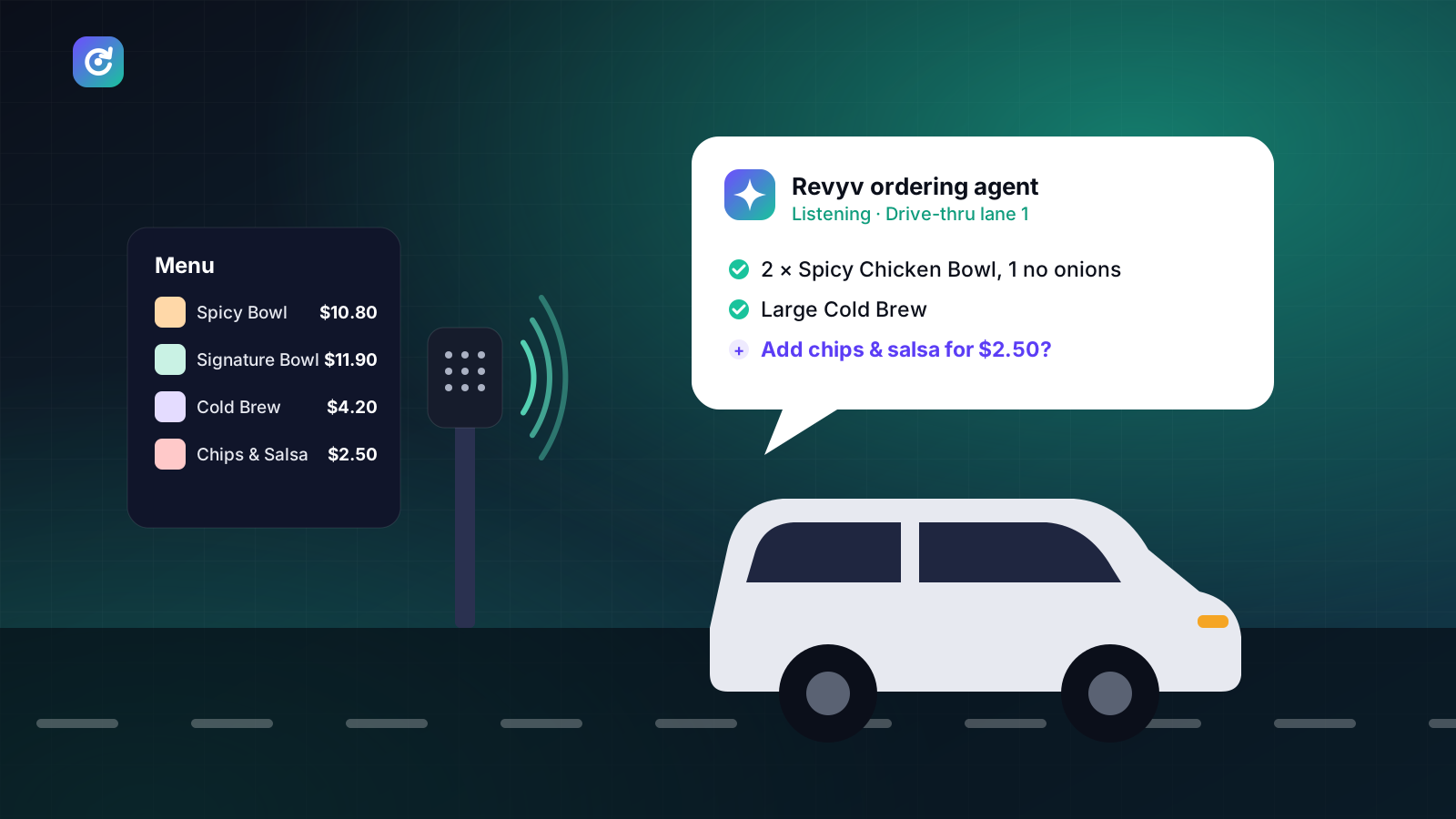
Revyv’s AI ordering agent runs on the same unified menu, pricing and availability as every other channel, so the drive-thru, phone, chat and app all sell the same thing. Orders flow into one stream for the kitchen, payment is always handled by Revyv’s secure checkout, and every AI feature can be switched on or off by brand, market or location.
Learn more about Revyv Agents or talk to our team.
Sources
- Taco Bell’s drive-thru voice AI expands to nearly 900 restaurants, Nation’s Restaurant News, July 2026
- Restaurant AI gets a much-needed reality check, Restaurant Business
- Taco Bell revs up drive-thru AI deployment, Restaurant Dive